Thursday, October 14, 2010

First seeds are growing


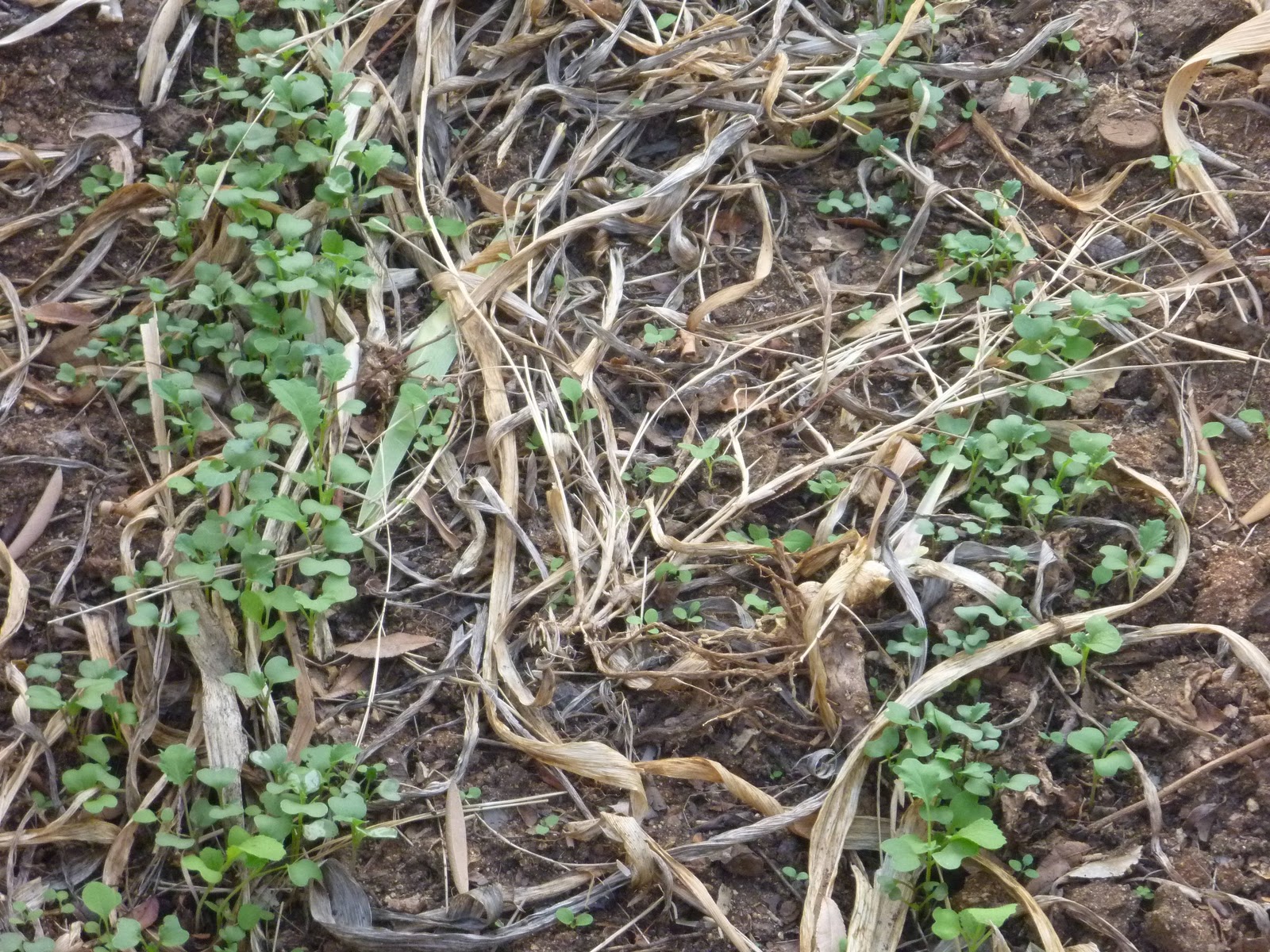
 Here is the first bed of greens.  The cilantro is on the right and the left and then more medially on the right are some turnip greens and on the left some korean cabbage.


Basil sprouts in the herb garden

 OK, I have no clue what these are.  My mom planted all of these.

Cilantro..

 No clue... I think these are Korean cabbage.

 Again, this is the herb garden and I have no clue what these are.

 Turnip greens.

 More turnips?

Sunday, August 8, 2010

Wednesday, August 4, 2010

It starts with the chickens

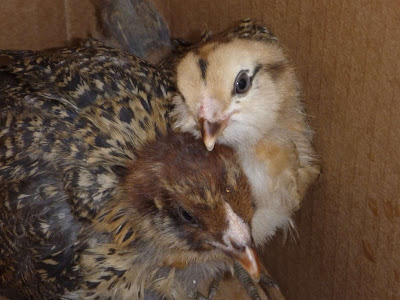
Today we got two 6 week old Ameraucana chickens.  Their names are Henna and Starlight, with Henna being the larger dark headed pullet.


Karenna named Henna and Kalista named Starlight and they love the chickens.  Perhaps a bit too much.


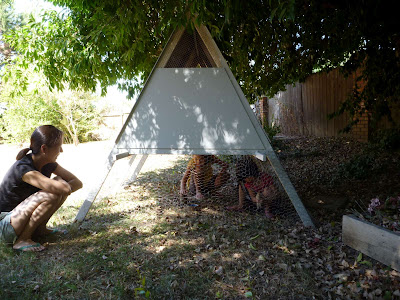
I made a chicken tractor for them which I think will work in our small lot.


Friday, June 11, 2010

Plant list

I'm trying to keep a list of plants I want to grow that I think will do well in the climate.  I'll adjust this post as needed

Moringa
strawberry tree
Fig
Peach
california hazelnut - tolerates shade.
pacific blackberry - tolerates shade.
blueberry
New Zealand spinach
comfrey
nanking cherry
mulberry
Nasturtium
grapes
purslane
jerusalem artichoke, aka sunchoke
strawberry.
artichoke
pomegranate
mexican elderberry
pineapple guava
amaranth

Saturday, May 1, 2010

Moringa oleifera


I just found out about this plant and it's perfect for the inland empire.  Moringa is often called the miracle plant because it is highly nutritious and every part of the plant is edible other than the bark.  It grows extremely fast growing several feet per year and will start fruiting in the first year after it is planted from seed.  The reason it is perfect is that it only requires 10 inches of rain per year, loves heat and can grow in poor soils.  I plan to plant 20-30 trees and use them to make mulch as well as food for us and the chickens.  When the soil has improved to the point we can grow other things, I'll thin them out and keep a couple.  

You can read more about this amazing plant, at wikipedia.

Wednesday, March 24, 2010

Unintended consequences


Today I saw a story that once again reiterates that the things we do have unintended consequences.  The almond crop in California currently produces 80% of the world's almonds.  This would seem like a good thing and economically, it is.  However to achieve this, California has approximately 200,000 acres of nothing but almonds in perfect rows.  This makes more maximum efficiency in harvesting but this is essentially a dead ecosystem.  Nature does not grow just one plant all by itself for thousands of acres.  Almonds require pollination by honeybees to produce.  However almonds only produce flowers in early spring therefore if there is only almonds for thousands of acres, any local honeybee colony dies from starvation.  Also because there is no healthy ecosystem, thousands of tons of fertilizer and pesticides and herbicides are sprayed on the almonds to keep them alive.  So how do we pollinate?  Well, instead of allowing polyculture and a self sustaining system, they decide to ship honeybee colonies in.  Every spring 1.4 million honeybee colonies are trucked in from all over the United States and placed in this 200,000 acres.  So think about this.  You have millions of colonies being shipped stacked one on top of another over thousands of miles of interstate breathing diesel fumes spreading parasites and diseases to each other while they are in such close proximity.  They are also transported in early spring when they are at their weakest at the end of winter.  Then they are released into a field that has been heavily permeated with pesticides and herbicides.  Then they are trucked to the next crop they are to pollinate because the way we grow crops doesn't allow for natural pollination.

And we wonder why honeybees are dying?

Luckily, there are things we can do to help the bees and in essence save our food supply.

There's a local group in socal called Backwards Beekeepers and they rescue local wild honeybees and allow them to be normal bees.  I would do this myself but, I have anaphylaxis to bee stings so it's probably not a good idea for me but if you're interested, it's a good thing to do.

Monday, March 22, 2010

Do you eat like an SUV?

As it turns out, what you eat may be more important than what you drive.  Industrialized agriculture is very fuel intensive.  Millions of gallons of diesel are used to grow and harvest corn of which 76 percent go to feed animals.  This corn is then shipped to feedlots.  Animals are then shipped to slaughterhouses.  Carcasses are shipped to packing plants.  Meat is then shipped to your grocery.  Animals also emit lots of greenhouse gases.  So, as you can tell, there's a lot of fossil fuel burning going on in the name of a hamburger for lunch.  Gidon Eshel and Pamela Martin have been studying the environmental impact of dietary choices and being a vegan is not surprisingly the most sustainable diet.  In fact, the carbon footprint difference between a vegan and someone who gets 50% of his/her calories from meat is similar to the difference between driving a small car and an SUV.


We all knew that being vegetarian was better for our health and less cruel to animals - now we know that its better for the planet as well.